 Lawsuit Update Center


Sexual abuse inside a women’s prison is not a relationship, a misunderstanding, or a gray area. It is an abuse of custody and control by someone who has power over where a woman lives, works, receives medical care, and whether she is punished for speaking up.
California women’s prison sexual abuse lawsuits now include claims tied to Central California Women’s Facility in Chowchilla, California Institution for Women in Chino, and the Folsom Women’s Facility. Some cases involve named officers who were criminally charged or convicted. Others involve medical abuse, kitchen or work assignment abuse, retaliation after reporting, ignored grievances, failed PREA investigations, abusive doctors, and institutional decisions that allegedly let dangerous staff stay around women in custody.
This page is written for survivors and families who are trying to understand whether they have a civil case. The answer depends on the facility, dates, perpetrator, proof, injuries, reporting history, and deadline rules. You do not need a criminal conviction to bring a civil sexual abuse lawsuit. You do need a careful timeline, the right defendant theory, and a lawyer who understands prison abuse cases against the California Department of Corrections and Rehabilitation (CDCR).
If you were abused at a California women’s prison, contact our office today at 888-322-3010, or get a free online consultation.
California Women’s Prison Facilities
Central California Women’s Facility, Chowchilla Sexual Abuse Lawsuits
Central California Women’s Facility, often called CCWF or Chowchilla, is one of the most significant facilities in California women’s prison sexual abuse litigation. CDCR describes CCWF as the largest female institution in California. In a sexual abuse case, a large facility can create more hiding places for misconduct, more layers of supervisors, more places where complaints can stall, and more room for dangerous staff to move through isolated areas without meaningful accountability.
In September 2024, the United States Department of Justice announced a civil rights investigation into staff sexual abuse at CCWF and California Institution for Women. DOJ said it was investigating whether CDCR protects incarcerated people at those facilities from sexual abuse by correctional staff. The announcement cited media reports, audits, advocacy, litigation, and hundreds of private lawsuits filed over the prior two years alleging officer sexual abuse at CCWF over the last decade. DOJ described allegations ranging from groping during searches and genital rubbing to forcible rape.
Those are not small allegations. They describe a custodial environment where abuse was allegedly not limited to one bad employee or one missed warning. Civil cases against CDCR usually seek exactly that broader record: who knew, when they knew it, how the report was handled, whether the accused staff member remained in contact with women, whether the survivor was punished or transferred, and whether other women had reported similar conduct before.
Gregory Rodriguez and the public record at CCWF
The Gregory Rodriguez prosecution is one of the most concrete public examples of CCWF abuse allegations becoming criminal findings. In January 2025, Rodriguez, a former CCWF correctional officer, was convicted of 64 sexual abuse charges, including rape and sexual battery. Reporting described allegations involving 13 incarcerated women, with records showing a pattern in which he verbally harassed women, made explicit remarks, and summoned women to isolated areas without cameras by claiming they had appointments or work duties.
In August 2025, Rodriguez was sentenced to 224 years in prison. Reporting on the sentencing said he had targeted women over nearly a decade, and that a report was received in 2014, but Rodriguez was not terminated at that time. One survivor was reportedly punished and placed in solitary confinement after reporting him.
A conviction does not automatically prove every civil claim by every survivor. It does, however, change the settlement posture for cases connected to the same officer, time period, units, or institutional response. It helps establish that the risk was real, the abuse was not imaginary, and the prison’s response to earlier warnings deserves hard scrutiny.
Israel Trevino and repeated warning signs
Another CCWF example involves former correctional officer Israel Trevino. Public reporting described allegations that Trevino groped and fondled an incarcerated woman in restraints, tried to pull up a woman’s shirt, and put his hand down her pants. Prison officials reportedly fired him in 2018 for sexual misconduct, and records said he had worked at the prison for more than a decade and had previously been formally warned for sexually harassing comments.
That type of history is exactly why negligent retention and negligent supervision claims are often powerful in prison sexual abuse lawsuits. A prior warning for sexually harassing comments may not prove a later assault by itself. But it can obviously become important when the same employee later has physical access to incarcerated women, performs searches, controls movement, or uses custody power to isolate women. The civil case asks whether CDCR had enough warning to restrict, retrain, investigate, monitor, or terminate the employee before more harm occurred. More often than not in these situations, the CDCR did nothing but look the other way.
Retaliation and the August 2024 CCWF force incident
Sexual abuse cases at CCWF also raise retaliation issues. Surveillance footage from an August 2024 incident at CCWF in which officers used pepper spray, OC grenades, and batons during an operation that injured 13 women. The case reportedly settled for $1.9 million, while a separate class action alleged denial of medical care and excessive force. Court filings described more than 150 women moved to a dining hall for a cell search, held for hours without food or medication, and subjected to force during extreme heat.
Additional reporting said the complaint alleged that the operation was led in retaliation for sexual misconduct complaints. CDCR did not admit wrongdoing in the settlement. But we all know that retaliation is one of the main reasons incarcerated survivors do not report sexual abuse. When a woman believes she may lose housing, lose a good job, be placed in segregation, receive discipline, be transferred away from support, or be assaulted after speaking up, silence is not consent. It is survival.
For CCWF cases, lawyers should ask about more than the assault itself. They should ask what happened before and after: Did the officer threaten you? Did he promise favors? Did he control your job, showers, phone access, medical movement, mail, contraband, discipline, housing, or visitation? Did anyone else report him? Were you moved, punished, disbelieved, or told to stop talking? Those details can help make an institutional liability claim work. But you know what the most important evidence is? A credible plaintiff who is clearly speaking her truth. That alone can be enough.
California Institution for Women (CIW) Sexual Abuse Lawsuits
California Institution for Women, known as CIW, is a CDCR women’s prison in Chino. The DOJ investigation announced in September 2024 covers CIW along with CCWF. DOJ specifically referenced a civil lawsuit filed on behalf of 21 women alleging staff sexual abuse at CIW, including forcible rape and penetration, groping, oral copulation, threats of violence, and threats of punishment. DOJ said the alleged conduct occurred from 2014 to 2020.
DOJ also described allegations that staff at CCWF and CIW sought sexual favors in exchange for contraband and privileges, and that accused officers ranged in rank and included staff responsible for handling complaints. That last point is especially serious. A prison cannot have a meaningful reporting system if the people receiving or controlling reports are part of the same culture that protects abusers.
CIW cases can involve the same basic sexual abuse patterns seen at other prisons: unwanted touching during searches, coerced sex, threats, forced exposure, abuse in isolated work areas, and staff using discipline or privileges as leverage. But CIW has also drawn attention for abuse allegations tied to medical care and job assignments. Those settings can make liability stronger because the prison gave the staff member a specific position of authority, then allegedly failed to control how that authority was used.
Medical abuse allegations involving Dr. Scott Lee
In February 2025, a class action was filed by women alleging that Dr. Scott Lee, a CIW OB-GYN, abused incarcerated patients for years. The allegations are that from 2016 to 2023, while Lee served as the prison’s sole gynecologist, he performed abusive exams, used coercive procedures, refused to stop exams when patients were in pain, used restraints, made sexualized comments, and retaliated against patients who complained.
Medical abuse inside prison is different from an ordinary medical malpractice case. A patient in custody may have no real choice of doctor, no practical ability to leave an exam, and no safe way to refuse a provider who controls access to care. When the provider is the only gynecologist, the power imbalance is even sharper.
Our lawyers allege that prison officials were aware of problems but failed to hold Lee accountable. He was reported to the Medical Board in 2022 after alleged abuse of a pregnant patient and a delay in hospital transport. Those allegations, if we can prove, go directly to notice and retention. Once a provider is reported for abusive conduct, the institution has to do more than move paper. It has to protect women.
CIW kitchen and work assignment abuse allegations
CIW has also faced allegations involving a former supervisory prison cook. In February 2026, lawsuits by two women accusing former CIW supervisory cook Marcus Johnson of rape or sexual assault during kitchen work assignments in 2020. The women alleged that Johnson used threats of disciplinary write-ups and job-related power to coerce or silence them. One internal claim was substantiated and another was not substantiated. Johnson denied wrongdoing, resigned during the investigation, and no criminal charges had been reported at that time.
Work assignment abuse is common in custodial sexual abuse cases because prison jobs give staff leverage. A job can mean access to movement, wages, food, time out of a cell, better treatment, or protection from worse housing conditions. A supervisor who controls that job can use write-ups, schedule changes, discipline, or threats of transfer as weapons. In a civil lawsuit, those details matter less as background and more as proof of coercion.
For CIW survivors, the intake should be specific. Was the abuse tied to a housing unit, clinic, transport, kitchen, education building, warehouse, laundry, chapel, yard, or search area? Were you called out by false appointment, job request, medical pass, or disciplinary pretext? Did anyone else see you leave or return? Were you told nobody would believe you because you were incarcerated? Those facts help show how the prison environment made the sexual abuse possible and, in fact, easy for the perpetrator.
Folsom Women’s Facility Sexual Abuse Lawsuits
Folsom Women’s Facility requires a more careful explanation because the public record is thinner than the record for CCWF or CIW. CDCR lists Folsom Women’s Facility among the facilities deactivated in January 2023. It makes the path to finding evidence a bit harder to find because survivors may now be spread across other prisons, staff may have transferred, and records sit in different systems. But that does not mean there are not many viable claims.
Public legal advocacy materials have reported that women formerly held at Folsom Women’s Facility have come forward with civil claims alleging sexual abuse and retaliation by correctional staff, including allegations that officials failed to prevent known patterns, ignored reports, and created an environment where survivors were silenced. The same routine we see at CIW and Chowchilla.
That does not mean a Folsom claim is weak. It means the case may depend more heavily on survivor testimony, staff rosters, grievances, PREA records, housing logs, work assignment documents, medical records, disciplinary files, call records, witness declarations, and proof of prior complaints against the same staff member. A closed facility can still have a paper trail. It may show where a staff member worked, who supervised the post, which cameras were in place, which blind spots were known, which women were assigned to the same area, and whether complaints were ignored before the survivor was harmed.
For Folsom Women’s Facility cases, timing is critical. Because the facility closed in 2023, many claims may involve abuse that happened years ago. California’s adult sexual assault statute can provide a longer civil window for some claims, but claims against public entities and public employees raise separate government claim issues. You should not assume the case is too old, nor that it is safe. The deadline analysis needs to be done with exact dates.
Why Custody Changes the Legal Analysis
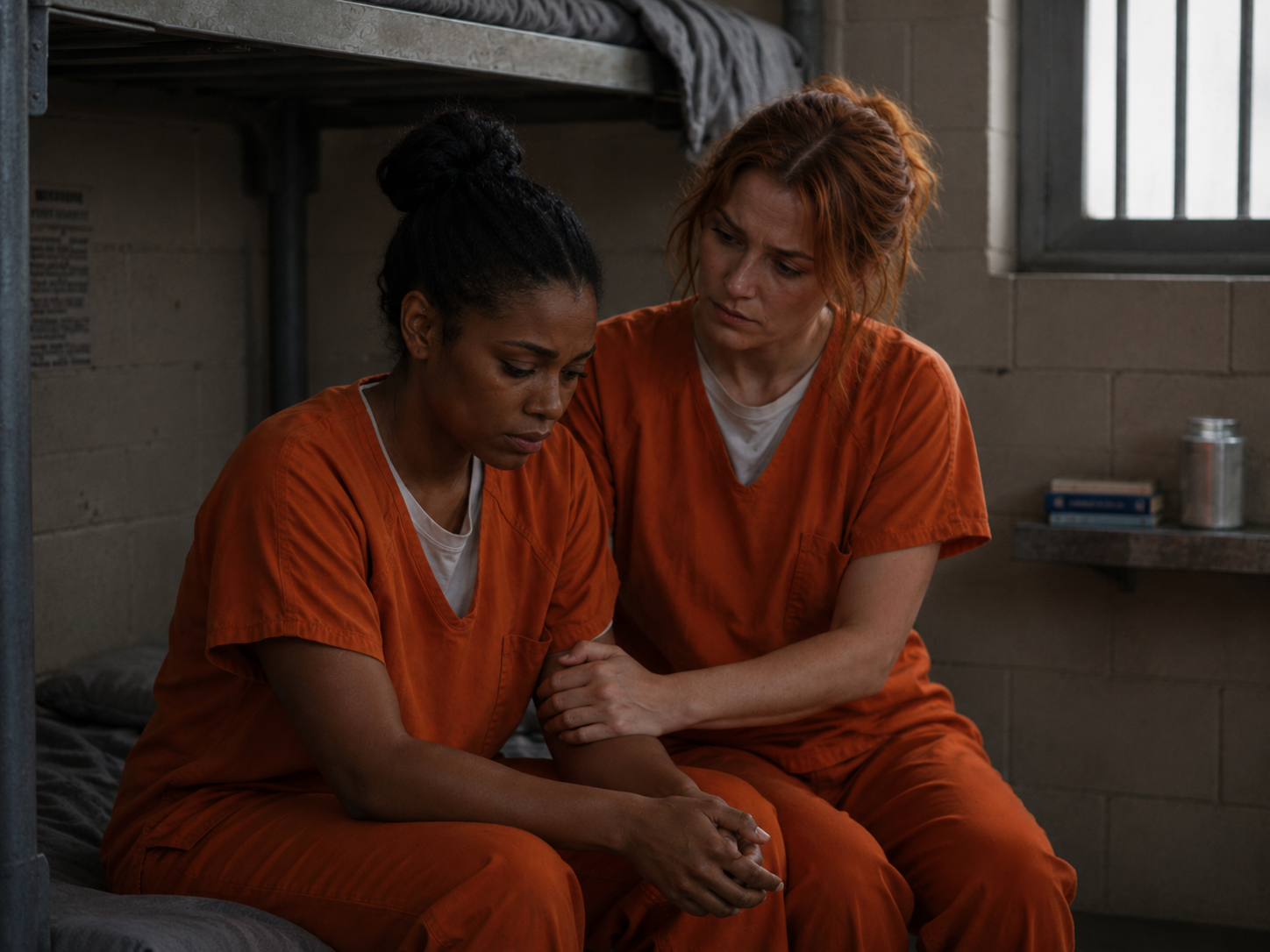
Correctional staff cannot defend sexual contact with an incarcerated person by calling it a consensual relationship in the ordinary sense. California Penal Code section 289.6 makes it a public offense for a detention facility employee, officer, agent, contractor, volunteer, or peace officer to engage in sexual activity with a consenting adult confined in a detention facility. The point is direct: custody destroys meaningful consent for these purposes.
That legal structure matters for civil claims because defendants sometimes try to blur the facts. They may point to notes, letters, contraband, gifts, phone access, or privileges and suggest that the survivor participated. A lawyer should push back hard. In custody, gifts and favors are often part of the coercion. A staff member who controls your movement, housing, job, access to medical care, discipline, and safety is not an equal partner. He is the gatekeeper.
Shared Legal Theories in California Women’s Prison Sexual Abuse Lawsuits
Negligent hiring
Negligent hiring asks whether the institution should have known before granting the employee access to incarcerated women that the person was unsuitable for that role. This can involve prior employment history, prior sexual misconduct complaints, domestic violence history, criminal background, dishonesty in applications, prior discipline, or failure to contact prior institutions.
PREA standards address this directly. Federal regulations prohibit agencies from hiring or promoting employees who may have inmate contact if they have engaged in sexual abuse in confinement settings, been convicted of sexual activity by force or coercion, or been civilly or administratively adjudicated for that conduct. The standards also require background checks, efforts to contact prior institutional employers, periodic criminal background checks, and questions about prior misconduct.
A negligent hiring claim is strongest when the paper trail existed before the survivor was abused. If the staff member had prior complaints, failed disclosures, prior prison discipline, or warning signs that were not checked, the institution cannot credibly claim the abuse came out of nowhere.
Negligent retention
Negligent retention is often the heart of these cases. It asks why the institution kept a dangerous person in a position of power despite warning signs. The warning signs may be formal PREA complaints, informal reports, medical disclosures, grievances, witness statements, suspicious movement logs, prior sexual harassment discipline, repeated requests to be alone with certain women, or complaints that the employee used threats and favors to control people.
The Rodriguez allegations at CCWF show why retention is so important. Public reporting said a report was made years before his termination and conviction, yet he allegedly continued to target women for years. When a survivor can show that the prison had earlier warning and did not remove the staff member from access, the civil case becomes stronger because the later abuse was preventable.
Negligent supervision
Negligent supervision focuses on how the employee was allowed to operate. Prisons know where abuse occurs: blind spots, closets, medical rooms, staff bathrooms, kitchens, warehouses, housing unit offices, search areas, transport areas, chapel spaces, and work sites. Supervision failures can include poor camera coverage, no audit of movement, ignored boundary violations, a lack of female staff during sensitive encounters, and allowing one staff member to control a woman’s movement or job without oversight.
Failure to investigate
Failure to investigate can be just as damaging as the original abuse because a bad investigation teaches staff that nothing will happen and teaches survivors that reporting is dangerous. PREA standards require agencies to ensure that administrative or criminal investigations are completed for all allegations of sexual abuse and sexual harassment. The standards also require evidence protocols and specialized training for investigators.
A weak investigation has familiar signs. The survivor is interviewed in a hostile way. The accused employee is warned before evidence is preserved. The case is closed because there are no cameras in the very location the prison failed to monitor. The complaint is treated as a rule violation by the survivor. Witnesses are not interviewed. Medical records are not reviewed. Prior complaints are separated, so no pattern appears. The employee is moved quietly, allowed to resign, or transferred to another post.
Those failures support liability because they increase future risk. They also increase damages. A survivor who reports and is ignored often suffers a second injury: the message that the institution values the abuser’s job more than her body.
Institutional liability and civil rights claims
For CDCR facilities, claims include state-law negligence theories, failure to protect, negligent hiring, negligent retention, negligent supervision, negligent investigation, and civil-rights theories against individual officers or officials. Claims against CDCR itself require careful handling because CDCR is a state agency, and public entity rules, immunity doctrines, claim presentation rules, and federal constitutional pleading limits can affect who can be sued and where.
PREA is not a simple private damages statute by itself. But PREA standards are still important. They establish what prisons are supposed to do to prevent, detect, report, investigate, and respond to sexual abuse. The standards require zero-tolerance policies, training for employees and contractors, inmate education, medical and mental health training, and data retention. Those rules help show what reasonable prison safety practices look like.
Case Value in Women’s Prison Sexual Abuse Lawsuits
No honest lawyer can value a prison sexual abuse case from the facility name alone. A CCWF case is not automatically strong because Rodriguez was convicted. A CIW case is not automatically proven because the DOJ opened an investigation. Facility history helps, but case value comes from evidence, harm, and legal exposure.
Strong value drivers include repeated assaults, penetration, threats, physical force, staff control over housing or job assignments, medical abuse, pregnancy or gynecological injury, retaliation after reporting, corroborating witnesses, prior complaints against the same staff member, preserved grievances, medical or mental health documentation, criminal charges, internal substantiation, and proof that supervisors knew about danger before the abuse continued.
Defendants value these cases lower when the timeline is unclear, the staff member is unnamed, deadlines are shaky, no report was made, records are missing, or the claimed injury is not documented. That does not mean the case should be rejected. Many survivors did not report because reporting was dangerous. But a lawyer has to rebuild the proof from other sources: housing logs, witness names, family calls, transfer records, disciplinary files, medical notes, mental health notes, and patterns involving the same staff member.
There is instructive guidance for the possible settlement values of these cases. A notable case is the FCI Dublin settlement, where the federal government agreed to pay $115.8 million to 103 women who alleged sexual abuse and retaliation at the federal women’s prison in Dublin, California (averaging nearly $1.1 million per case). That settlement does not mean every California women’s prison case is worth seven figures. But it does show what can happen when individual abuse claims are supported by a broader institutional record, criminal convictions, repeated reports, and proof that the facility’s failures were not isolated.
Injuries Survivors Can Claim
The injury in a prison sexual abuse case is not limited to the physical act. Survivors may suffer PTSD, panic attacks, depression, nightmares, dissociation, shame, anger, loss of trust, sexual dysfunction, chronic pain, pelvic injury, pregnancy-related harm, sexually transmitted infections, self-harm, substance use relapse, eating disorders, and fear of correctional staff or medical providers. Incarcerated survivors may also lose jobs, credits, visitation, phone access, housing stability, and access to medical or mental health care because of the abuse or retaliation.
You should not minimize harm because there was no visible injury. Many sexual abuse cases involve coercion instead of bruises. A staff member can cause severe trauma through threats, forced exposure, unwanted touching, forced oral sex, forced penetration, sexualized searches, abusive medical exams, or repeated boundary violations. The law recognizes emotional harm because the injury is the violation of bodily autonomy under custody.
Delayed reporting is common. Defendants know this, but they still use delay against survivors. The answer is proof. A good intake asks what changed after the abuse: mental health requests, discipline, transfers, letters to family, changes in sleep, medical visits, self-harm, panic symptoms, refusing appointments, avoiding work assignments, or asking to move units. Those events can help document trauma even when the survivor did not feel safe saying the full truth at the time.
Deadlines for California Women’s Prison Sexual Abuse Lawsuits
Deadline rules can make or break these cases. You should not rely on a general internet statute of limitations answer because prison sexual abuse claims may involve adult sexual assault statutes, public entity claim rules, delayed discovery, revival windows, and different defendants.
For California adult sexual assault claims, Code of Civil Procedure section 340.16 generally provides a civil deadline of the later of 10 years from the last act or 3 years from discovery of injury or illness caused by the assault. The statute also states that neither a criminal prosecution nor a conviction is required.
What to Do Next If You Were Abused at CCWF, CIW, or Folsom
Start with a timeline. Write down the facility, years, housing unit, bunk or cell location, work assignment, medical appointment location, staff name, nickname, rank, shift, and any witness who saw you leave, return, cry, change behavior, request medical help, or report. Include what the staff member controlled: food, job, showers, movement, discipline, phone, mail, contraband, housing, medical care, or protection from other staff.
Preserve every document you can: PREA reports, 602 grievances, medical slips, mental health requests, disciplinary write-ups, transfer papers, letters, emails, visitor messages, call logs, outside hospital records, police reports, and any notes you made. If you do not have documents, do not panic. Many incarcerated survivors could not keep their paperwork safe. A lawyer can seek records through claim presentation, public records requests, subpoenas, discovery, court orders, and witness investigations.
Do not clean up the story to make it sound simple. The real facts are often messy. Maybe the staff member gave you food or contraband. Maybe you wrote him notes because you were scared. Maybe you delayed reporting. Maybe you reported once and then took it back after threats. Tell the truth early. Our lawyers can work with complicated facts. Surprises later are what hurt cases.
FAQ: California Women’s Prisons Sexual Abuse Lawsuits
Getting a Lawyer for Your Claim
California women’s prison sexual abuse lawsuits are not just claims against individual abusers. The strongest cases expose how institutions allowed abuse to continue: bad hiring, ignored warnings, weak supervision, failed investigations, retaliation, and complaint systems that protected staff instead of incarcerated women.
If the abuse happened at CCWF, CIW, or Folsom Women’s Facility, the facility history may help. But the case still rises or falls on your timeline, your proof, the institution’s notice, your injuries, and the deadline rules. The safest move is to get the timeline reviewed before you assume the door is closed.
If you were abused at a California women’s prison, contact our office today at 888-322-3010, or get a free online consultation.
