 Lawsuit Update Center


Lenovo class action lawsuits have targeted several different problems in Lenovo laptops and consumer products, including defective displays, broken hinges, battery drain, USB and microphone failures, website privacy claims, and preinstalled software. Some of these cases have already settled. Others are still pending or in the investigation stage.
As of June 2026, the older Lenovo Flex 5 and Yoga 730 display defect settlements are closed. The newer Lenovo class action activity involves a pending website privacy case and active investigations into laptop hardware defects, especially hinge cracking in the Lenovo IdeaPad 5 Type 81YK. We talk about all these cases and your options.
Current Lenovo Class Action Lawsuits and Investigations
There is no open Lenovo laptop defect settlement accepting claims as of June 2026. That may frustrate people with a cracked hinge, a failed display, a battery drain issue, or a broken USB port. But it is better to be clear about the posture of these cases. The current Lenovo matters are mostly pending lawsuits or investigations, not claim forms backed by an approved settlement fund.
| Lenovo Matter | Status in June 2026 | What It Involves | Claim Available? |
|---|---|---|---|
| Lenovo website privacy lawsuit | Pending federal lawsuit | Alleged interception and transfer of website user data. | No settlement claim form yet. |
| Lenovo IdeaPad 5 hinge crack investigation | Active investigation | Hinge cracking, bezel separation, stiff hinges, popping sounds, and related screen damage. | No approved settlement yet. |
| Lenovo ThinkPad T14 Gen 3 and T14s Gen 3 investigation | Active investigation | Reported USB port failures and internal microphone failures. | No approved settlement yet. |
| Lenovo Yoga Slim 7 battery drain investigation | Active investigation | Excessive battery drain while the laptop is asleep or in Modern Standby. | No approved settlement yet. |
| Lenovo Flex 5 and Yoga 730 display settlement | Older closed settlement | Alleged screen flickering, freezing, blackouts, and display failure. | Claim period closed. |
Lenovo Data Privacy Class Action Lawsuit
A new Lenovo data privacy class action lawsuit was filed in February 2026 in the U.S. District Court for the Northern District of California.
The lawsuit alleges that Lenovo used tracking technologies on its website to intercept users’ electronic communications and transfer personal data, persistent identifiers, and behavioral information to its Chinese parent company. The proposed class includes people in the United States whose electronic communications with Lenovo’s website were allegedly intercepted and whose communications or personal data were used on or after April 8, 2025.
Lenovo denies that it improperly shares customer data. This case is pending. There is no approved settlement, no claim form, and no guaranteed payment as of June 2026.
Lenovo Hinge Lawsuit Investigation
The newer Lenovo hinge lawsuit involves the Lenovo IdeaPad 5, Type 81YK. Consumer complaints and online reviews describe hinge cracking, bezel separation, stiff hinges, popping or cracking sounds when the laptop is opened, and screen or cable damage tied to the hinge area. Lawyers are investigating whether these failures reflect a common defect rather than isolated accidental damage.
The complaint is familiar to anyone who has dealt with a defective laptop. The laptop is used normally. The hinge or bezel begins to separate. The screen may become unstable or damaged. Then the manufacturer allegedly treats the problem as accidental or cosmetic damage instead of a product defect.
This is not an open settlement claim fund. It is an active investigation. That means affected Lenovo IdeaPad 5 owners may be able to report their experience to lawyers investigating possible claims, but there is no court-approved settlement benefit, no payment deadline, and no guarantee that compensation will be available.
Other Current Lenovo Laptop Defect Investigations
Lenovo is also the subject of investigations involving other laptop problems. These are not settlement claims, but they may be relevant if you own one of the affected models and have documentation of the failure.
Lenovo ThinkPad T14 Gen 3 and T14s Gen 3 Defect Investigation
One investigation involves ThinkPad T14 Gen 3 and T14s Gen 3 laptops. The reported problems involve non-functioning USB ports and internal microphone failures. If you own one of these ThinkPad models and have experienced those problems, save your purchase records, repair records, communications with Lenovo, and photographs or videos showing the issue.
Lenovo Yoga Slim 7 Battery Drain Investigation
Another investigation involves Lenovo Yoga Slim 7 laptops and Modern Standby battery drain. Consumers have reported excessive battery loss while the laptop is supposed to be asleep, including overnight battery drain that allegedly does not improve after BIOS, driver, or power setting updates.
This type of claim is different from a cracked hinge or failed display case. The allegation is not that a part snapped. The allegation is that a laptop marketed for portable use may have a power-management problem that makes sleep or standby use unreliable.
What to Do If You Have a Lenovo Laptop Problem
If your Lenovo laptop has a hinge failure, a screen failure, battery drain, a USB failure, a microphone failure, or another recurring defect, preserve the evidence. Save screenshots of Lenovo support threads, product reviews, and consumer complaints describing the same problem with the same model. These cases are built from patterns, and the pattern is only useful if consumers can document what happened.
Save This Information
- Model name, machine type, serial number, and purchase date.
- Photos or videos showing the hinge crack, screen failure, bezel separation, USB problem, microphone failure, or battery drain.
- Warranty claims, repair tickets, chat logs, emails, and customer service messages with Lenovo.
- Repair estimates, invoices, and proof of out-of-pocket costs.
- Notes showing when the problem started and whether it happened during ordinary use.
Do not throw away the laptop if you are pursuing a claim. In a product-defect case, the device itself can serve as evidence.
Older Lenovo Class Action Lawsuits
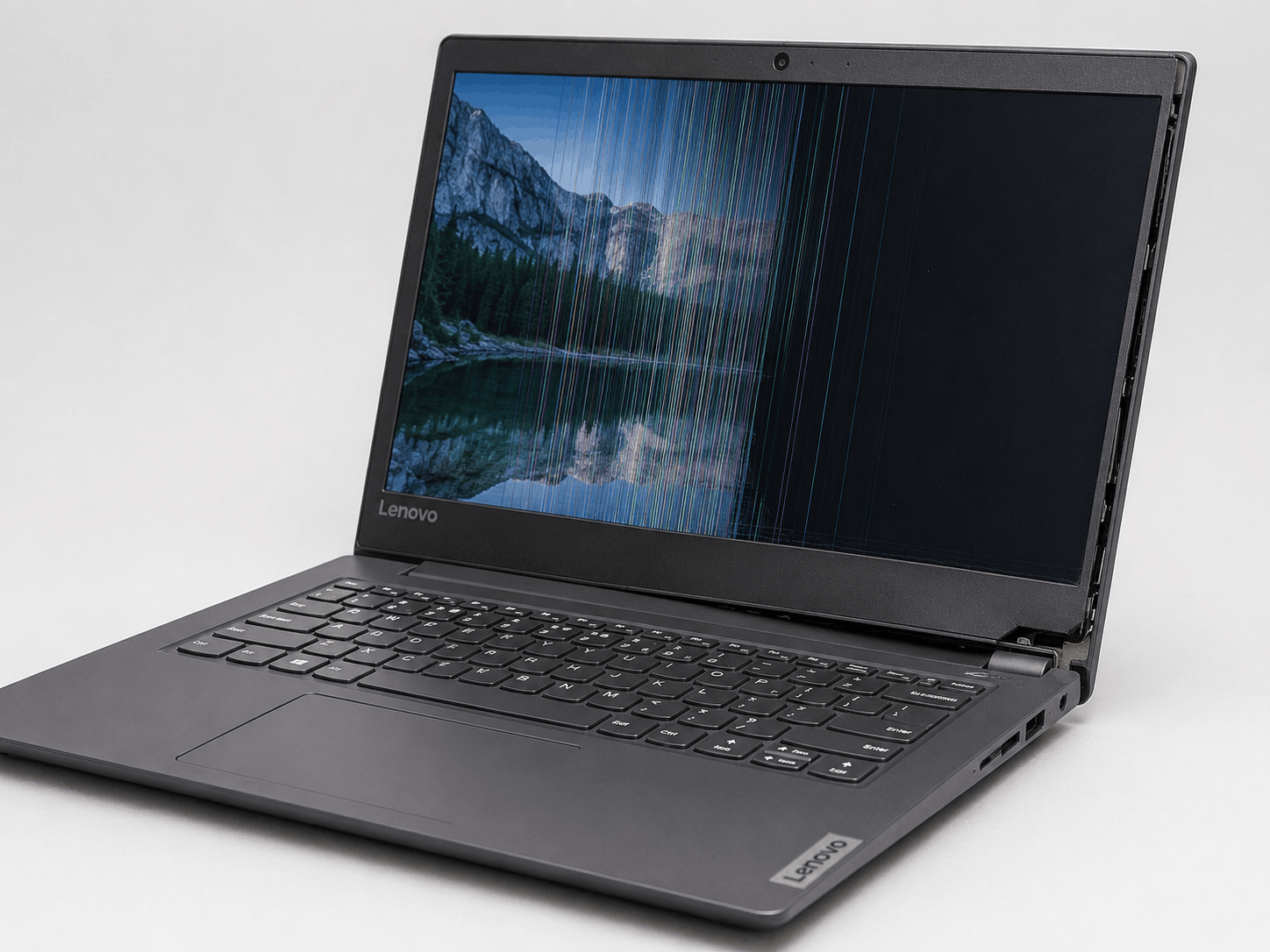
The Lenovo class action lawsuit originally discussed here alleged that Lenovo sold Flex 5 and Yoga 730 laptops with a display defect that significantly impaired the laptops’ functionality.
Despite sending his Flex 5 laptop to Lenovo for repairs twice during the warranty period, the plaintiff, along with many other purchasers, claimed that the display issues persisted after the repairs. Lenovo was accused of suggesting ineffective repair methods or failing to address the core issue causing the defect.
The lawsuit claimed Lenovo knew about this defect but continued to market and sell these laptops, highlighting their high-resolution displays and versatile screen positions as major selling points.
The Older Lenovo Flex 5 and Yoga 730 Class Action
The lawsuit against Lenovo centered on a problem with some of its laptop models, in which the screen allegedly failed to work properly due to a defect. Even after sending the laptops back to Lenovo for repairs, customers reported the same screen problems returned.
The lawsuit alleged that Lenovo knew about the issue but kept selling the laptops anyway, telling customers the problem could be fixed with simple solutions that did not actually solve the underlying defect. Because of this, purchasers claimed they were left with devices that could not reliably perform their intended functions, including basic tasks such as watching movies, using apps, and using the laptops in different screen orientations.
The lawsuit argued that if customers had known about this alleged flaw, they would not have bought these laptops or paid as much for them. Lenovo denied wrongdoing, and the case was resolved through a settlement rather than a trial.
Lenovo Flex 5 and Yoga 730 Settlement
In the U.S. District Court for the District of Minnesota, the case involving Martin Gisairo, who bought a Lenovo laptop at Costco in 2017, and other consumers was resolved through a class action settlement.
On February 14, 2024, after a final approval hearing, the court approved the settlement. The settlement created a claims process for eligible consumers who owned covered Lenovo laptops and could show that their laptops suffered from the alleged display defect.
Key Points of the Order
- Jurisdiction and Venue: The court confirmed its authority over the case, the settlement, and the parties and found that the case was properly before it.
- Settlement Agreement and Class Definition: The settlement focused on a defined group of end-user consumers who bought covered Lenovo laptops in the United States for personal or mixed personal and business use, excluding laptops bought for resale.
- Settlement Benefits: Eligible class members could seek complimentary repairs, a one-time cash payment, or reimbursement of up to $100 for a qualifying prior repair.
- Class Certification for Settlement: For settlement purposes, the court recognized the case as a class action covering individuals who fit the settlement definition.
- Class Representatives: The named plaintiffs were designated as class representatives to act on behalf of the settlement class.
- Class Counsel: The court appointed specific law firms to represent the interests of the class.
- Class Notice: The court approved the notice process for informing class members about the settlement, their rights, and the claims process.
This settlement website has the settlement documents and related information.
What the Flex 5 and Yoga 730 Settlement Means in 2026
As of June 2026, the Lenovo Flex 5 and Yoga 730 display defect settlement is closed. The settlement received final approval in 2024, and the claim period has passed. Affected owners generally cannot file a new settlement claim unless the court or settlement administrator reopens the process, which consumers should not assume will happen.
For qualifying Lenovo laptop owners who filed on time, the settlement offered a practical but limited recovery. Eligible class members could seek a free repair, a one-time $100 cash payment, or reimbursement of up to $100 for a prior qualifying repair. That is meaningful if you had a defective laptop, but it is not the same thing as a full refund or replacement computer.
That is often the trade-off in consumer class-action settlements. The settlement creates a uniform claims process and avoids years of additional litigation, but the individual payment may be modest compared to what a consumer believes the product failure actually cost.
The attorneys’ fee award was reported at $840,000. That number may frustrate consumers who see a $100 individual payment, but courts review fee requests in class actions before approving them. The bigger issue for class members is usually simpler: Did they receive notice, understand the deadline, and file a claim before the claim period closed?
The court appointed lawyers to represent the interests of the laptop buyers and approved the settlement process. In practical terms, the court’s decision established a process to resolve the display defect claims in accordance with the settlement agreement. That process has now run its course.
Older Lenovo Yoga 700-Series Hinge Lawsuit
The newer IdeaPad 5 hinge investigation should not be confused with the older Lenovo Yoga 700-series hinge lawsuit. The older case alleged that Lenovo Yoga 700, 710, 720, and 730 two-in-one laptops had defective hinges that could crack, loosen, detach, damage the screen area, and make the devices difficult or impossible to use.
The theory was similar to many laptop defect cases. Consumers claimed Lenovo promoted the durability and flexibility of the Yoga line, including its two-in-one hinge design, while allegedly knowing that the hinge system could fail prematurely. Lenovo denied wrongdoing.
This hinge case is different from the Flex 5 and Yoga 730 display settlement discussed above. The display settlement involved screen flickering, freezing, blackouts, and non-physical display failures. The Yoga hinge litigation focused on hinge cracking and mechanical failure. Those problems can overlap for a consumer because a hinge failure may damage the screen, but legally, they are not the same claim.
Older Lenovo Superfish Adware Settlement
Lenovo also previously resolved litigation over Superfish VisualDiscovery adware that was allegedly preinstalled on certain Lenovo laptops. Plaintiffs claimed the software affected performance, invaded privacy, and created security risks. That case resulted in an $8.3 million settlement.
The Superfish case shows the range of consumer claims Lenovo has faced. Some cases involve hardware defects, like displays or hinges. Others involve privacy, security, software, or performance issues.
How Consumer Class Action Settlements Like This Work
A consumer class action settlement typically involves a process in which a group of consumers collectively brings a lawsuit against a company for defective products, false advertising, privacy violations, data breaches, or other misconduct that affects many people in a similar way. The goal is to achieve compensation or other relief for the affected group from the defendant company.
Here is how the process usually works:
- Class Action Filed: The process begins when a plaintiff or several plaintiffs file a lawsuit on behalf of a larger group with similar claims against a defendant. This could involve a defective product, misleading advertising, a privacy violation, or another consumer claim.
- Class Certification: The court must determine whether the case meets the requirements for a class action. This includes showing that there are enough people with similar claims, the named plaintiffs can adequately represent the class, and a class action is a fair and efficient way to resolve the dispute.
- Notification: Once a class is certified for litigation or settlement, potential class members are notified about the lawsuit or settlement. The notice explains who is covered, what the case is about, and how class members can participate, object, or opt out.
- Settlement Negotiations: Many class action cases settle before trial. Settlement negotiations may result in an agreement between the plaintiffs and the defendant. The terms may include cash payments, repairs, refunds, credits, product replacements, or changes to business practices.
- Preliminary Approval: The proposed settlement is presented to the court, which reviews it for fairness, adequacy, and reasonableness. If the court preliminarily approves the settlement, the parties notify class members about the proposed terms.
- Fairness Hearing: After class members have been notified, the court holds a fairness hearing to decide whether the settlement should receive final approval. Class members may have an opportunity to object before the court makes that decision.
- Final Approval: If the court finds the settlement fair, reasonable, and adequate, it grants final approval. That decision makes the settlement binding on class members who did not opt out.
- Distribution: After final approval, the settlement is implemented. This often involves a claims process where class members submit information to receive compensation or other benefits.
- Legal Fees and Costs: The court also reviews attorneys’ fees and litigation expenses. In the older Lenovo Flex 5 and Yoga 730 settlement, the lawyers were awarded fees and costs as part of the approved settlement process.
Consumer class action settlements give many people a way to recover something when individual claims would be too small or too expensive to bring individually. The process is imperfect, but it can create relief that would not exist otherwise. The most important thing for consumers is timing. When a settlement is open, file before the deadline. Once the deadline passes, it is usually too late.
