 Lawsuit Update Center


Spinal cord stimulator lawsuits are being filed by patients who say their implanted pain device caused new injuries instead of relief. Our lawyers are handling these claims.
These cases involve devices made by Boston Scientific, Abbott, Medtronic, Nevro, and other neuromodulation companies. The core claims are that the device migrated, malfunctioned, shocked the patient, burned, failed to control pain, caused neurological problems, required revision surgery, or had to be removed entirely.
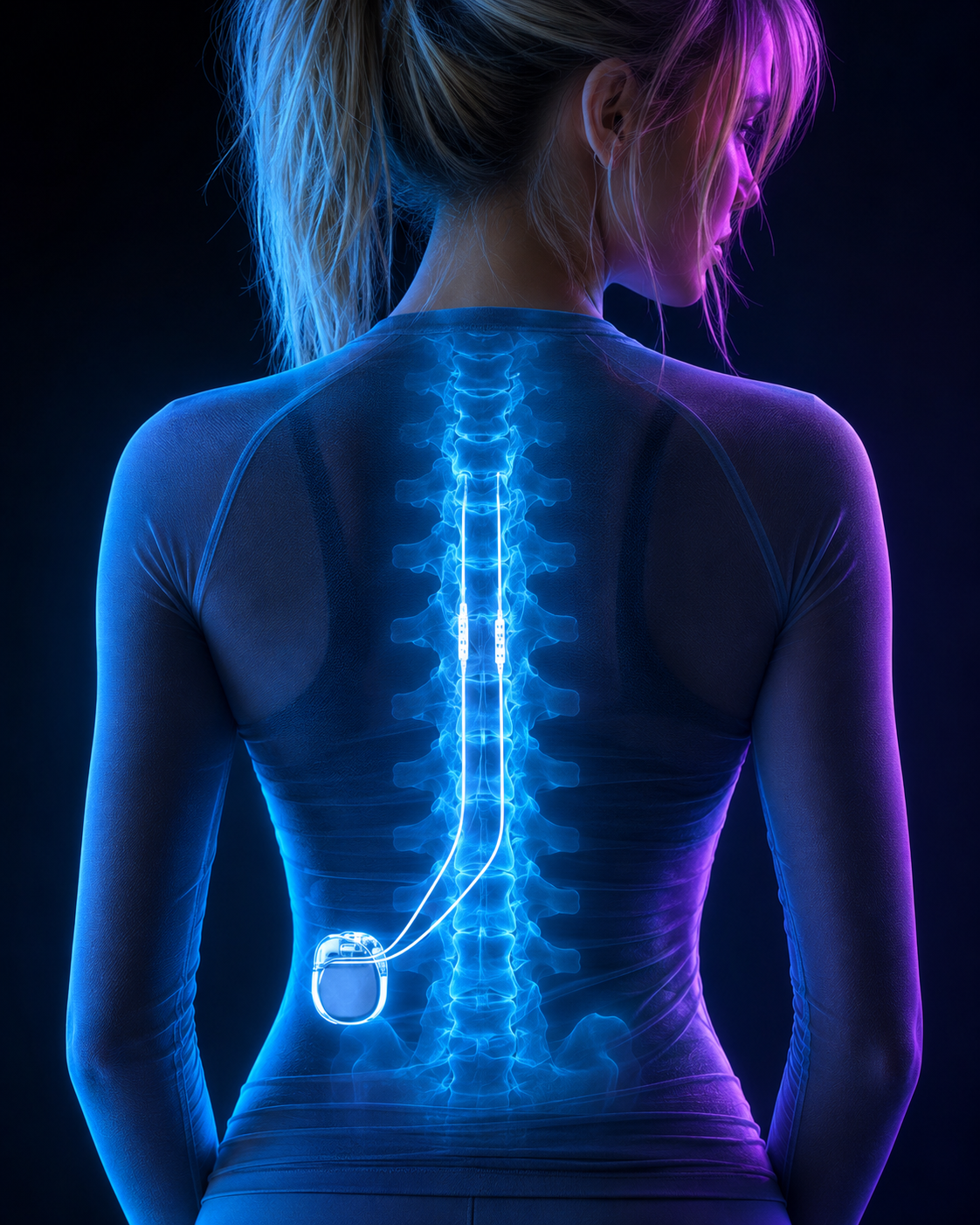
A spinal cord stimulator is a surgically implanted device near the spinal cord. The leads sit in the epidural space, and the implanted pulse generator sends electrical stimulation intended to interfere with pain signals. When the device works, it helps patients with chronic pain. When it fails, the patient is often left with worse pain, additional surgery, nerve injury, infection, paralysis, or permanent limitations that did not exist before the implant.
If you had a spinal cord stimulator implanted and later suffered electric shocks, burning pain, worsening symptoms, infection, nerve damage, bowel or bladder problems, device migration, revision surgery, or removal surgery, contact our office today at 888-322-3010, or get a free online consultation.
Medical Warning
If you have a spinal cord stimulator and are experiencing new weakness, numbness, bowel or bladder changes, fever, wound drainage, severe new pain, electric shocks, or difficulty walking, call your doctor immediately or seek emergency care. A lawsuit can wait. A spinal cord compression, epidural abscess, or device-related neurological emergency cannot.
Spinal Cord Stimulator Lawsuit Updates
The spinal cord stimulator litigation is still in the early stages. The big news of late is that spinal stimulator lawsuits against Boston Scientific have been centralized in a new MDL. Claims against Abbott, Medtronic, Nevro, and other manufacturers have not been folded into a single industrywide proceeding. Plaintiffs’ lawyers wanted something to cover all of these products but the court found that each company has its own devices, warnings, approval history, product advisories, sales practices, and failure patterns.
| Development | What Happened | Why It Helps Explain the Litigation |
|---|---|---|
| Boston Scientific MDL created | In June 2026, the Judicial Panel on Multidistrict Litigation centralized federal lawsuits against Boston Scientific in the Central District of California before Judge Josephine L. Staton. The MDL is now called In re Boston Scientific Corporation Spinal Cord Stimulator Products Liability Litigation. | The MDL gives Boston Scientific cases coordinated discovery and motion practice, which usually increases pressure to test liability and settlement value. |
| Industrywide MDL rejected | The JPML rejected a broad MDL covering Abbott, Boston Scientific, Nevro, and Medtronic together. The panel said each manufacturer has its own device line and regulatory history, and that an industrywide MDL could complicate case management. | Patients should not assume all spinal cord stimulator claims will move together. Device manufacturer, model, implant date, and failure history will drive the lawsuit strategy. |
| Boston Scientific WaveWriter Alpha advisory | In July 2024, Boston Scientific issued an urgent medical device advisory for WaveWriter Alpha spinal cord stimulation implantable pulse generators. The advisory described a potential device reset during charging that could temporarily suspend stimulation and then resume, causing some patients to feel undesired sensations. | Product advisories can help show what the manufacturer knew, what physicians were told, and whether a patient’s symptoms match known device behavior. |
| Abbott product advisories | Abbott has published product advisories involving neuromodulation systems, including communications about Proclaim SCS systems, surgery mode information, MRI mode issues, battery replacement indicator information, and Bluetooth communication concerns for certain devices. | Abbott claims may turn on the exact model, advisory, implant date, revision history, and whether the patient or doctor received timely safety information. |
| FDA adverse event data | The FDA’s MAUDE database collects medical device reports involving adverse events, injuries, deaths, and malfunctions. The FDA cautions that MAUDE data is not intended to prove event rates or compare event rates across devices. | MAUDE reports do not prove causation on their own, but they can identify recurring patterns: shocks, lead migration, burns, device failure, infection, and removal surgery. |
| Public Citizen report | Public Citizen has criticized the FDA’s oversight of implanted spinal cord stimulators, citing published literature suggesting complication rates between 30% and 40% and FDA adverse event reports involving injuries and deaths from 2004 to 2019. | The report supports a broader plaintiff theme: these devices were marketed as pain solutions while long-term safety and device-modification questions remained unresolved. |
What These Spinal Cord Lawsuits Are About
A spinal cord stimulator lawsuit usually starts with a patient who already has chronic pain. The question is what changed after the implant. Did the patient develop new electric shock sensations? Did the pain move to a new area? Did the device stop working? Did the leads migrate? Did the patient need revision surgery? Did infection develop? Did weakness, numbness, bowel problems, bladder problems, burning, balance problems, or autonomic symptoms start after implantation? The answers to these questions help our lawyers determine if you have a viable lawsuit.
The strongest cases are very specific. “The device did not work” is not enough. We need to get into the weeds. Something like “The Boston Scientific WaveWriter Alpha reset during charging, caused sudden stimulation changes, and required surgical removal” is stronger. “The Abbott Proclaim system became stuck in MRI mode and therapy shut off” is also stronger. “The doctor implanted a paddle lead without adequate imaging, and the patient woke up with neurological deficits” can also be a viable case. There are a lot of variations to this, but you get the idea: our lawyers need details to determine whether you have a case worth pursuing.
There are two main lanes. A product liability case focuses on the device and the manufacturer. A malpractice case focuses on the surgeon, hospital, pain doctor, implant technique, preoperative evaluation, postoperative monitoring, and response to complications. Some cases require both analyses.
Who Has a Spinal Cord Stimulator Claim?
You likely have a claim if you had a spinal cord stimulator implanted and later suffered serious complications that required medical care, revision surgery, removal surgery, hospitalization, or caused lasting disability. You do not need to know yet whether the problem was the device, the surgery, the programming, or the follow-up care. The records will paint that picture for us.
The best intake starts with the exact device information. You want the manufacturer, model, implant date, implanting doctor, hospital or surgery center, trial stimulator results, permanent implant records, programming history, revision history, explant records, and the reason the device was removed or revised.
Product Failure Claim
Device reset, battery problem, lead fracture, lead migration, painful shocks, burning, overheating, loss of therapy, or malfunction requiring removal.
Surgical Malpractice Claim
Improper placement, lack of imaging, poor patient selection, failure to monitor, delayed removal, mismanagement of infection, or failure to respond to neurological symptoms.
Failure to Warn Claim
The patient and doctor were allegedly not properly warned about known risks, device behavior, MRI restrictions, battery problems, migration, or revision risk.
Serious Injury Claim
Paralysis, nerve damage, bowel or bladder dysfunction, chronic worsening pain, autonomic dysfunction, infection, sepsis, or permanent work restrictions.
A minor programming problem or temporary discomfort is probably not enough for a strong lawsuit. The stronger claims involve objective medical evidence, additional procedures, documented device problems, and a clear before-and-after-injury story.
Legal Theories in Spinal Cord Stimulator Cases
How our lawyers approach a given claim depends on the target. If the claim is against Boston Scientific, Abbott, Medtronic, Nevro, or another manufacturer, the case may involve defective design, manufacturing defect, failure to warn, negligent misrepresentation, breach of warranty, fraud-based theories, or failure to comply with FDA reporting and approval requirements.
| Theory | What Plaintiff Must Show | Evidence That Helps |
|---|---|---|
| Design or manufacturing defect | The device allegedly had a defect that caused shocks, migration, failure, burning, abnormal stimulation, or the need for removal. | Explanted device, product code, serial number, revision records, imaging, adverse event reports, and expert review. |
| Failure to warn | The manufacturer allegedly knew or should have known of the risk and failed to adequately warn doctors or patients. | Labeling, product advisories, physician letters, sales representative statements, IFUs, and safety communications. |
| Negligent implantation | The doctor or hospital allegedly failed to plan, image, place, monitor, or respond properly before or after surgery. | Operative report, preoperative MRI, CT, fluoroscopy records, recovery notes, nursing notes, and neurological exams. |
| Failure to respond to complications | The provider allegedly ignored red flags such as weakness, paralysis, bowel or bladder changes, infection signs, or severe new pain. | Call logs, portal messages, ER records, nurse notes, fever records, labs, imaging, and timing of explant surgery. |
| Parallel federal violation claim | The manufacturer allegedly violated federal requirements, rather than merely being accused of making a product that state law requires to be safer. | PMA file, PMA supplements, FDA submissions, adverse event reporting, recalls, product advisories, and expert regulatory analysis. |
Common Injuries and Complications
Spinal cord stimulator complications range from annoying to catastrophic. The lawsuit’s settlement value depends heavily on that range. A short period of inadequate stimulation is not the same as a device infection that leads to an epidural abscess and causes paralysis.
The injuries most likely to support a strong claim are the ones that are medically documented and materially different from the patient’s baseline chronic pain condition.
| Complication | What It Can Look Like | Why It Can Strengthen a Claim |
|---|---|---|
| Lead migration | Stimulation moves, becomes ineffective, shocks a new area, or requires revision surgery. | Imaging and revision records can objectively show device movement. |
| Electrical shocks or burning | Sudden painful stimulation, burning sensation, jolts, or inability to tolerate the device. | Programming notes, patient complaints, and device logs may support the timing and severity. |
| Infection or abscess | Fever, wound drainage, sepsis, spinal epidural abscess, hospitalization, or emergency removal. | Infection cases can become high-value when there is a delayed diagnosis or spinal cord compression. |
| Neurological injury | Weakness, numbness, gait problems, bowel or bladder dysfunction, paralysis, or autonomic dysfunction. | Objective neuro deficits, imaging, and timing after surgery can strengthen the case for causation. |
| Failed pain relief | The device never works, stops working, or worsens chronic pain. | This claim is harder unless paired with revision surgery, device malfunction, or proof that the patient was not warned or was not a proper candidate. |
Spinal Cord Stimulator Verdicts and Settlements
There are no settlement averages for the current spinal cord stimulator product liability litigation. Again, as a mass tort, this litigation is just getting started. The federal Boston Scientific spinal cord stimulator MDL is still brand new, and it has not produced bellwether verdicts or a global settlement. We are a good bit away from that.
These are individual reported outcomes involving spinal cord stimulator procedures, delayed diagnosis, cord compression, hematoma, infection, paralysis, or worsened neurological injury. Most are medical malpractice claims rather than manufacturer product defect claims. These examples are useful comparisons, but they are certainly not a formula for what a current Boston Scientific, Abbott, Medtronic, or Nevro product liability case might be worth.
| Amount | Case Type | What Happened | Why It Is Useful |
|---|---|---|---|
| $27,000,000 verdict | Florida medical malpractice, 2025 | A Brevard County jury awarded $27 million after a patient underwent spinal surgery that included the placement of a spinal cord stimulator. The patient later showed signs of spinal cord compression from a hematoma, suffered an avoidable permanent spinal cord injury, and was left partially paralyzed. | This is a major comparison point for cases involving cord compression, delayed recognition, paralysis, nerve pain, bowel or bladder dysfunction, and permanent loss of mobility. |
| $10,000,000 verdict | Oregon medical malpractice, 2026 | A patient who developed a severe infection related to a recently implanted spinal cord stimulator received a 10 million verdict. The report described delayed imaging, uncertainty over MRI compatibility, a spinal epidural abscess, and partial paralysis. | This shows how quickly case value can rise when a stimulator-related infection leads to delayed diagnosis and permanent neurological injury. |
| $1,250,000 settlement | New Jersey medical malpractice, 2024 | A 61-year-old patient received a 1.25 million settlement after suffering complications after a spinal cord stimulator implant, including incontinence, difficulty walking, spinal cord compression, removal surgery, additional laminectomies, and worsened paralysis. | This case is especially relevant to cases involving cord compression, bowel or bladder symptoms, removal surgery, and worsened paralysis. |
The lesson from this limited sampling is that case value rises sharply when there is objective neurological injury, spinal cord compression, epidural abscess, hematoma, paralysis, bowel or bladder dysfunction, removal surgery, or permanent disability.
Settlement Value and Case Value
There is no honest average settlement value for the current spinal cord stimulator product liability litigation. The Boston Scientific MDL is new. Abbott, Medtronic, Nevro, and other manufacturer cases may move on separate tracks. The settlement range will not become clear until courts rule on preemption, discovery begins, expert testimony develops, and bellwether cases are tested.
Still, we can say what drives value. The best cases show a clear worsening after implantation, a specific device failure or surgical error, objective injury, additional medical procedures, and long-term loss. The weaker cases, if they are cases at all, are built mostly on disappointment that the device did not provide enough pain relief.
| Value Driver | Why It Increases Pressure | Proof That Helps |
|---|---|---|
| Device removal or revision surgery | Additional surgery shows the complication was significant and medically confirmed. | Operative reports, explant records, revision notes, device analysis, and pathology or culture records. |
| Neurological deficit | Weakness, paralysis, incontinence, or gait problems move the case beyond pain complaints. | Neurology records, exams, EMG, MRI, CT, PT notes, assistive device records, and disability records. |
| Known advisory or recall issue | A matching advisory can support both notice and failure-to-warn arguments. | Model number, serial number, patient card, manufacturer letter, doctor notice, and programming records. |
| Infection and delayed diagnosis | Infection can cause catastrophic harm if it compresses the spinal cord or progresses to sepsis. | ER records, labs, imaging, cultures, fever records, antibiotic records, and timing of decompression or removal. |
| Lost work or permanent restrictions | Lost income and disability increase economic damages and settlement pressure. | Wage records, disability applications, work restrictions, vocational reports, and tax records. |
The defense will focus on preexisting chronic pain, degenerative spine disease, failed back surgery syndrome, diabetes, neuropathy, opioid history, psychological screening, prior disability, and the known risks of implantation. Those defenses can lower value if the records do not show a clear change after the stimulator.
Evidence That Can Support a Spinal Cord Stimulator Lawsuit
A viable case needs the device records. Without them, the case is hard to evaluate. The patient implant card is helpful, but it is not enough. Our attorneys need the operative report, product stickers, model number, lot number, serial number, programming records, imaging, revision records, explant records, and all complaints to the doctor or manufacturer.
Please do not throw away the remote, charger, patient programmer, implant card, or explanted device paperwork. If the device was removed, ask where it went. Sometimes the explanted device is discarded. Sometimes it is returned to the manufacturer. Sometimes it is stored by the hospital. That chain of custody can become important.
| Record | Why It Helps | Where To Look |
|---|---|---|
| Implant records | Identifies the exact device, model, lead type, implant date, and manufacturer. | Hospital chart, surgery center, pain clinic, implant card, and operative report. |
| Programming notes | Shows what settings were used, when symptoms were reported, and whether the device was adjusted repeatedly. | Pain clinic, manufacturer representative notes, patient programmer records, and doctor notes. |
| Imaging | Can show lead position, migration, compression, abscess, hematoma, or other objective findings. | MRI, CT, X-rays, fluoroscopy, ER records, and hospital radiology systems. |
| Revision or removal records | Confirms the complication was serious enough to require another invasive procedure. | Explant operative report, pathology, device return records, hospital billing, and surgeon notes. |
| Symptom timeline | The before-and-after story is often the heart of causation. | Portal messages, calls, texts, family notes, ER visits, pain diaries, and pharmacy records. |
Deadlines to File a Spinal Cord Stimulator Lawsuit
Do not wait. There is no set deadline because the rules vary by state and by claim type. Every state is different and product liability, medical malpractice, failure to warn, wrongful death, consumer protection, and warranty claims may have different limitation periods.
Statute of limitations deadlines are especially unforgiving. Some states require pre-suit notice, certificates of merit, expert reports, review panels, or special filing steps. A product liability claim may have a different deadline than a malpractice claim arising from the same implant.
The biggest deadline trap is assuming the clock starts when the device is removed. The defense may argue it started earlier, when you first felt shocks, when symptoms worsened, when imaging showed migration, when a doctor recommended revision, or when you were told the stimulator failed. The lesson? Contact a lawyer soon rather than later.
Get the dates reviewed by an attorney as soon as possible: trial implant, permanent implant, first symptom, first complaint, first programming change, first imaging proof, revision surgery, removal surgery, diagnosis of nerve injury, and last follow-up.
What To Do Next
Call a lawyer from jump street. If you had prior spine surgery, chronic opioid use, diabetes, neuropathy, depression, prior disability, or longstanding pain, say that. Those facts do not automatically kill a case. Surprises later can.
Then turn to the device. Find your implant card, the manufacturer, the model, the surgeon, the facility, the implant date, and the removal or revision date, if applicable.
| Step | What To Do | Why It Helps |
|---|---|---|
| 1 | Gather implant cards, operative reports, product labels, and model numbers. | Device identification controls the manufacturer claim and advisory search. |
| 2 | Save imaging, programming notes, revision records, and removal records. | Objective records make the causation argument stronger. |
| 3 | Write down new symptoms that began after the device was implanted. | The case needs a clear before and after story. |
| 4 | Get the deadline reviewed before waiting for all records to arrive. | A strong claim can be lost if the filing deadline is missed. |
Spinal Cord Stimulator Lawsuit FAQs
Calling a Spinal Cord Stimulator Lawyer
If your spinal cord stimulator caused electric shocks, burning, worsening pain, infection, neurological injury, revision surgery, or removal surgery, contact our office today at 888-322-3010, or request a free online consultation.
