 Lawsuit Update Center


Camp Barrett Juvenile Detention Facility lawsuits involve allegations that boys detained at the former San Diego County youth facility in Alpine, California, were sexually abused, physically abused, threatened, ignored, or left unprotected by the adults responsible for their safety.
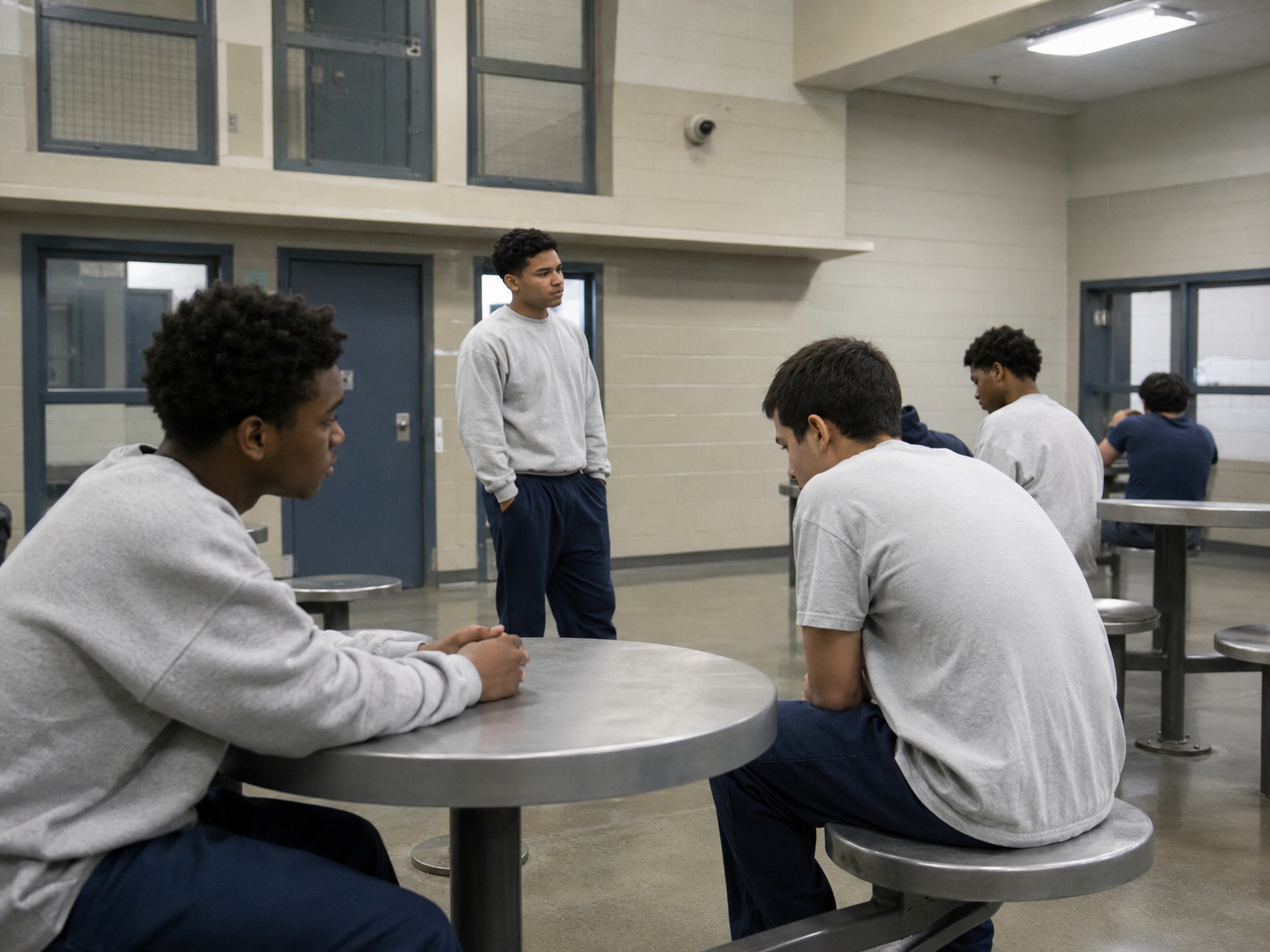
Camp Barrett was a juvenile detention facility operated by the San Diego County Probation Department. It was meant to serve as a rehabilitation program for boys placed in custody by the juvenile court system, many of whom were minors with no history of violence. But for some of the youth sent there, Camp Barrett became a site of profound trauma from physical and sexual abuse.
Survivors have come forward with allegations that staff members sexually abused boys in their custody, taking advantage of the facility’s isolation and lack of oversight. The reports describe a system that did not simply overlook warning signs but created the conditions that allowed abuse to occur. Officers had access to children in private spaces, complaints were ignored or never documented, and leadership failed to act despite indications of misconduct.
Instead of safety and rehabilitation, these boys were met with exploitation. The San Diego County Probation Department now faces serious questions about how this abuse was allowed to continue unchecked for years.
This page explains the history of Camp Barrett, the sexual abuse allegations, how the abuse allegedly happened, why San Diego County may be liable, how Camp Barrett lawsuits may be valued, how the Los Angeles County juvenile hall settlement helps frame settlement expectations, and what deadlines may apply to survivors who want to file a civil lawsuit.
If you were sexually abused at Camp Barrett or another San Diego County juvenile facility, your claim should be reviewed now. California law gives many childhood sexual abuse survivors more time to file, but the deadline rules are not simple. The sooner records are investigated, the better.
Table of Contents
Camp Barrett Juvenile Detention Facility Overview
Camp Barrett was a juvenile detention and rehabilitation facility in Alpine, California, operated by the San Diego County Probation Department. The facility sat in a rural area of eastern San Diego County, far from the courthouse, downtown San Diego, and many families whose children were placed there.
Camp Barrett was supposed to provide structure, counseling, education, discipline, and rehabilitation. Boys were sent there by the juvenile court system. Some were detained for relatively short commitments. Others were sent there because the county believed they needed a more structured custodial environment than community supervision.
The public description of the facility made it sound like a second chance. That is not what many survivors describe. They describe fear, sexual exploitation, physical abuse, intimidation, ignored complaints, and a remote facility where abusive staff members could operate with too little oversight.
The location is a major part of the liability story. Camp Barrett was not in the middle of the city. Families were farther away. Lawyers and court officers were not dropping in casually. In a juvenile detention setting, isolation can become a weapon. When children are locked away from public view and the adults inside the facility control access, movement, discipline, privileges, and reports, abuse can stay hidden much longer than it should.
History of Camp Barrett and the San Diego Juvenile Facility Scandal
Camp Barrett was part of San Diego County’s juvenile justice system for years. It was not simply a place to hold children overnight. It served as a county camp program in which boys were sent after juvenile court involvement. The official idea was rehabilitation. The reality alleged by survivors is very different.
San Diego County inspection materials identified Camp Barrett as a boys’ camp with a capacity of more than 100 children. By 2018, the County had already announced plans to close the rural Camp Barrett site and move the boys’ camp program to the Kearny Mesa juvenile campus. That transfer did not erase what happened at Camp Barrett. It simply moved the program.
The Camp Barrett allegations fall within a broader pattern of claims involving San Diego County juvenile facilities. Survivors have reported abuse and misconduct at other county facilities, including Kearny Mesa Juvenile Detention Facility, Rancho Del Campo Juvenile Ranch, East Mesa Juvenile Detention Facility, and the Girls Rehabilitation Facility. The facilities were different, but the central claim is similar: San Diego County took custody of children and failed to protect them from abuse.
That wider pattern matters for liability. A county facility does not operate in isolation from the agency that runs it. Policies, training, hiring standards, investigative practices, grievance systems, and leadership culture are shared across facilities. If the same county system repeatedly failed to detect or stop abuse, plaintiffs will use that evidence to show these harms were foreseeable and preventable.
What Happened at Camp Barrett?
Camp Barrett was intended to be a secure juvenile rehabilitation facility, somewhere young people could receive structure, counseling, and an opportunity to reset their lives. It operated under the authority of the San Diego County Probation Department, housing court-involved youth ordered into county custody. But for many of the boys sent there, Camp Barrett became the site of severe trauma and long-lasting psychological harm.
The lawsuits filed by survivors tell a consistent story. Rather than protecting and rehabilitating vulnerable children, Camp Barrett allowed predatory staff members to operate unchecked, creating a dangerous and exploitative environment.
Boys were allegedly groomed by those in power, the officers and staff who were meant to protect them. These officers used their uniforms and authority to gain trust, create dependency, and ultimately isolate and violate the children in their care. Survivors describe abuse carried out in ways that made it hard for children to defend themselves or speak out.
Some civil complaints and survivor accounts have identified officers allegedly involved in the abuse. The allegations are not limited to a single brief incident or a single alleged bad decision. Survivors claim repeated misconduct over time, enabled by systemic failures in hiring, supervision, reporting, and oversight.
Camp Barrett’s rural location allegedly helped the abuse stay hidden. Few outsiders visited; families were often far away. Children in custody depended on staff for almost everything, including movement, privileges, discipline, calls, meals, school, medical attention, and access to outside help. That level of control gave abusive adults enormous power.
Many of the children detained at Camp Barrett were nonviolent offenders. These were not all hardened or dangerous youth. Many were boys who came from unstable home environments, had learning or behavioral challenges, or needed services the juvenile justice system promised to provide. Instead, survivors say they were retraumatized in an environment that should have protected them.
The lawsuits filed today are not just about individual acts of abuse. They are about a system that allegedly failed at every level: in hiring, training, supervision, reporting, investigation, and oversight. They are about a facility that allegedly allowed predators to thrive and children to suffer in silence.
How Abuse Was Allegedly Allowed to Happen
Sexual abuse inside juvenile detention facilities usually does not happen because of one missing rule. It happens when several failures line up at once. A vulnerable child is placed in custody. An adult has authority. The facility gives that adult access to private or poorly supervised spaces. Complaints are ignored or discouraged. Supervisors fail to investigate. Other employees look away. The child learns that silence may be safer than reporting.
That is the core story survivors are telling about Camp Barrett. The abuse allegedly occurred because San Diego County created or tolerated a detention environment where children were isolated, staff power went unchecked, and complaints did not trigger meaningful protection.The power imbalance was overwhelming. A boy detained at Camp Barrett could not leave. He could not choose another program. He could not tell an abusive staff member to stay away. He could not call a lawyer or parent whenever he wanted. He lived under the rules of the same institution that employed the adults he feared.
Survivors describe a culture shaped by secrecy, fear, and control. Staff allegedly had intimate and unsupervised access to minors during vulnerable moments, including searches, showers, discipline, late-night checks, and times when youth were isolated from other residents. These settings were supposed to be controlled and safe. In the lawsuits, they are described as opportunities for abuse.
Victims were allegedly threatened, punished, or ignored if they tried to speak up. Some were accused of lying. Others were warned that reporting would only make things worse or extend their time in custody. When a child in a locked facility hears that message from a sworn officer or facility employee, it lands differently than an ordinary threat. The child knows the adult controls his daily life.
Complaints were allegedly ignored, discouraged, or quietly dismissed. In some cases, residents did not know how to file a complaint. In others, they were told nothing would be done or that no one would believe them. If supervisors failed to intervene or investigate, known abusers could remain in contact with children.
The remote location made the problem worse. Camp Barrett was far from the public eye. The facility’s distance from families, lawyers, and court officers allegedly made it easier for abuse to remain hidden and harder for children to get help.
San Diego County Liability and Negligence Claims
The San Diego County Probation Department is accused of gross negligence in hiring, retaining, and supervising abusive officers. The lawsuits allege that the County knew or should have known about past misconduct, placed children in environments that lacked safeguards, and failed to investigate or act on complaints, enabling repeat offenders to continue working with minors.
In a Camp Barrett lawsuit, the legal theory is not simply that an employee committed abuse. The stronger claim is that San Diego County created the opportunity for abuse, failed to respond to warning signs, and did not protect children after the risk was known or should have been known.
Negligent hiring focuses on whether the county allowed unsafe adults to work around children in the first place. That may involve background checks, prior employment issues, prior complaints, disciplinary history, references, psychological screening, training records, and whether the county ignored red flags.
Negligent retention focuses on what happened after the county had reason to know a staff member was dangerous. If an officer had prior complaints, boundary violations, excessive force reports, suspicious conduct, or a reputation among children, the county cannot pretend it had no reason to act.
Negligent supervision focuses on day-to-day operations. Juvenile facilities must control staff access to children. They must monitor showers, searches, discipline, late- night checks, transport, medical visits, and other vulnerable settings. If Camp Barrett allowed staff to isolate children without real oversight, that is not a small paperwork problem. It is a safety failure.
Failure to investigate is often one of the most damaging claims. If a child reported abuse and the facility buried it, dismissed it, treated it as a discipline issue, or failed to separate the abuser from children, the institution may be responsible for every additional child harmed after that report.
Camp Barrett cases may also involve constitutional claims, civil rights claims, mandatory reporting failures, negligent infliction of emotional distress, negligent supervision of residents, and claims tied to violations of sexual abuse prevention standards in custody settings. The exact claims depend on the facts, the dates, the defendants, and the available evidence.
Evidence That Can Prove a Camp Barrett Sex Abuse Lawsuit
These cases are not limited to what a survivor can remember perfectly. Memory matters, but institutional abuse cases are built through records and patterns. A lawyer will want to know what you remember. Then the investigation begins.
Useful evidence may include Camp Barrett intake records, housing assignments, staff schedules, incident reports, discipline logs, grievances, medical records, therapy records, education records, inspection reports, internal affairs files, personnel records, prior complaints, county policies, training records, PREA materials, and records from other San Diego County juvenile facilities.
Other survivors may also become critical witnesses. If several former residents describe the same officer, same unit, same tactic, same location, or same failure by supervisors, the case becomes harder for the defense to dismiss as one person’s unsupported memory.
You should not assume your case is impossible because you do not remember the abuser’s full name. Many survivors remember a first name, nickname, face, role, race, build, shift, housing unit, or where the abuse occurred. Records can often identify who was working in that area during that time. The stronger your details, the easier the investigation, but you do not need to solve the case before you call.
Injuries in Camp Barrett Sexual Abuse Cases
The injuries in Camp Barrett sexual abuse lawsuits are not limited to physical harm. Many survivors carry the damage for years before they understand how deeply the abuse changed them.
Sexual abuse in juvenile custody can cause post-traumatic stress symptoms, depression, anxiety, panic attacks, nightmares, shame, anger, substance use, sexual dysfunction, relationship problems, problems with authority, trouble sleeping, difficulty parenting, loss of trust, and long-term emotional instability.
Some survivors struggle with work, school, intimacy, anger, isolation, or addiction. Others bury the abuse for years and only begin connecting it to their adult life after therapy, a relationship crisis, a criminal justice experience, a substance use crisis, or hearing that other survivors have come forward.
If you were abused at Camp Barrett, you do not need to prove that every problem in your life came from that abuse. That is not the standard. The question is whether the abuse caused harm, worsened existing trauma, changed your life path, or created injuries that deserve compensation.
Defense lawyers often try to use a survivor’s background against them. They may point to juvenile court history, family instability, school problems, substance use, or later arrests. That does not defeat the claim. Many boys sent to Camp Barrett were vulnerable before they arrived. That vulnerability is exactly why the county had a stronger duty to protect them.
If you were a child in county custody, San Diego County had a duty to protect you. A difficult childhood, prior trauma, juvenile court history, or later life struggles do not excuse sexual abuse by staff or the failure to stop it.
Settlement Amounts in Camp Barrett Sex Abuse Lawsuits
Sexual abuse cases from Camp Barrett are not treated like ordinary lawsuits. These claims involve children who were placed in county custody for rehabilitation, only to be violated by the very officers sworn to protect them. The result is not just individual harm but institutional betrayal. That is why settlements in juvenile detention sex abuse cases can be substantial.
The best public benchmark comes from Los Angeles County. In 2025, Los Angeles County agreed to a $4 billion settlement to resolve thousands of juvenile facility sexual abuse claims. The average value under that agreement was close to $600,000 per claimant, although individual awards were not uniform. Later reporting indicated that payouts could range from roughly $100,000 to $3 million, depending on claim strength and allocation factors.
That does not mean every Camp Barrett case is worth $600,000. It does not mean every San Diego case will settle like Los Angeles. But there is no doubt that the Los Angeles settlement changed the conversation in California and dropped an anchor on how these lawsuits should be valued for settlement.
San Diego County sexual abuse settlments are expected to follow the Los Angeles format to a degree. That likely means claim review, documentation, allocation tiers, severity categories, corroboration review, and settlement values tied to the facts of each survivor’s claim. The county will likely want finality. Plaintiffs will want fair compensation, accountability, and recognition of the institutional failures that enabled the abuse.
There are reasons San Diego cases may be valued differently from those in Los Angeles. San Diego is a different venue. The number of claims may be smaller. The evidence may vary by facility. Camp Barrett was a rural boys’ camp, not the same facility system as the Los Angeles County juvenile halls. But the core liability theme the exact same — children in government custody sexually abused because the institution failed to protect them.
Settlement amounts vary, but several factors drive value: the severity and duration of the abuse, the age of the survivor at the time, whether the abuse was repeated, whether staff threatened or retaliated against the child, whether there is corroborating evidence, whether other survivors identify the same abuser, whether the county had notice, and the long-term psychological toll.
In general, repeated assaults, younger victims, staff perpetrators, documented complaints, evidence of cover-up, and serious long-term trauma increase value. Cases involving less specific identification, limited memory, no corroboration, or a weaker deadline posture could be valued lower or harder to pursue. Then again, some of the strongest cases are built on a strong story from the plaintiff alone.
Survivors should also understand that these lawsuits are not only about remembering the exact name of an abuser. They are about holding San Diego County responsible for a system that allegedly allowed sexual abuse to happen unchecked. Even survivors who cannot identify individual officers by full name may still have strong cases based on the county’s pattern of negligence and records showing who had access to them.
Most importantly, do not assume you are out of time. Many survivors in large institutional sex abuse cases receive compensation even when deadline arguments exist because counties may choose to settle for finality, budget certainty, and to avoid the risk of juries hearing evidence of institutional child sexual abuse. That does not mean every time barred claim will be paid. It means deadline concerns should be reviewed by a lawyer instead of relying on your guess of what it is.
Settlement Benchmark
The Los Angeles County juvenile hall settlement averaged close to $600,000 per claimant, with reported ranges from about $100,000 to $3 million. That is a benchmark for San Diego County juvenile facility cases, not a promise. Camp Barrett claim values will depend on the evidence and the individual facts.
Deadline to File a Camp Barrett Sex Abuse Lawsuit
The statute of limitations is the legal deadline for filing a lawsuit. In California childhood sexual abuse cases, the deadline depends heavily on when the abuse happened.
For Camp Barrett cases, most claims will involve abuse that occurred before January 1, 2024. Those claims are generally governed by California Code of Civil Procedure section 340.11. Under that statute, a survivor usually has until age 40, or five years after discovering that adult psychological injury or illness was caused by the childhood sexual assault, whichever deadline expires later.
For our current Camp Barrett intake, we are reviewing cases of survivors under 40. If you are older than 40, California law may still contain narrow exceptions or special rules that another lawyer may want to review, but our firm is not taking those Camp Barrett cases at this time.
If the abuse happened on or after January 1, 2024, California childhood sexual abuse law is different. Under California Code of Civil Procedure section 340.1, there is no time limit for many civil lawsuits seeking damages for childhood sexual assault. That rule applies to claims against the abuser and to claims against a person or entity whose wrongful, negligent, or intentional conduct legally caused the abuse.
California also removed a major procedural trap in childhood sexual assault cases against government entities. Under CCP sections 340.1 and 340.11, a childhood sexual assault claim generally does not need to be presented to a government entity before filing suit. That helps survivors bring claims involving counties, public agencies, detention operators, schools, or government contractors.
The bottom line is simple: if you were abused at Camp Barrett or another San Diego juvenile facility and you are under 40, your claim should be reviewed. The age deadline is real, and the sooner the records are investigated, the better.
Who We Can Help
Our team is committed to helping survivors who reach out. But because of strict legal deadlines and evidentiary requirements, we are sometimes limited in who we can represent. To move forward with a case, we need enough information to evaluate the legal standards set by California law.
If you or a loved one experienced sexual abuse while in custody at Camp Barrett or another juvenile facility in San Diego County, your claim should be reviewed if the basic criteria line up.
For San Diego juvenile hall sex abuse lawsuits, we are currently reviewing cases for people who were sexually abused while at a San Diego County juvenile facility, including Camp Barrett, Rancho Del Campo, East Mesa Juvenile Detention Facility, Kearny Mesa Juvenile Detention Facility, or the Girls Rehabilitation Facility. The survivor must have been under 18 at the time of the abuse.
The abuse may have been committed by a staff member, such as a correctional officer, probation staff member, or other facility employee. It may also involve another inmate or resident if the abuse occurred while the facility had custody and failed to supervise or protect the child.
You do not always need the abuser’s full legal name. A name helps, but a clear description may be enough to begin the investigation. Physical appearance, job title, role, unit, shift, your relationship or interaction with the person, and where the abuse happened can all help identify the abuser through records.
For our current intake, we are focused on abuse that occurred in 2009 or later and survivors who are currently under 40. We are generally not able to represent people who are already represented by another attorney or who have already signed a contract with another firm for this specific abuse claim.
No Upfront Cost
Our lawyers work on a contingency fee basis. You pay nothing unless we recover compensation for you. There is no risk in finding out if you have a case.
What To Do If You Were Abused at Camp Barrett
If you were abused at Camp Barrett, do not try to investigate the whole case yourself before contacting a lawyer. Your job is to tell us what you remember. Our job is to look for records, patterns, witnesses, staff assignments, prior complaints, and evidence that the county failed to protect you.
Write down the years you were at Camp Barrett, your age, the unit or dorm, the staff member’s name or description, where the abuse happened, whether anyone else saw anything, whether you told anyone, and whether you were threatened or punished.
Keep any records you still have. Juvenile court paperwork, probation records, medical records, therapy records, school records, letters, old messages, or names of other residents may help. Do not throw anything away because you assume it is not useful.
Do not post detailed allegations publicly before talking to a lawyer. Public posts can become evidence. The defense may use inconsistencies in dates, wording, or details to attack credibility. The safer move is to speak confidentially with a lawyer first.
Most of all, do not assume your case is too old or too hard to prove. Camp Barrett was a county facility. County records may exist. Other survivors may have come forward. The abuser may be identifiable even if you do not remember the full name. Your case deserves a real review.
Camp Barrett Juvenile Detention Facility Lawsuit FAQ
What is the Camp Barrett Juvenile Detention Facility lawsuit about?
Camp Barrett lawsuits involve allegations that boys detained at the former San Diego County juvenile facility in Alpine were sexually abused, physically abused, threatened, or left unprotected by staff and other adults responsible for their safety. The lawsuits focus on both individual abuse and institutional failures by San Diego County.
Where was Camp Barrett located?
Camp Barrett was located in Alpine, California, in rural eastern San Diego County. Its remote location is a major issue in the lawsuits because survivors allege the distance from families, lawyers, and outside oversight helped abuse remain hidden.
Who operated Camp Barrett?
Camp Barrett was operated by the San Diego County Probation Department. That means civil claims may focus on county hiring, training, supervision, reporting, investigation, discipline, and failure to protect detained youth.
Can I sue San Diego County if the individual abuser is no longer employed?
Possibly, yes. Many institutional abuse cases focus on the county’s negligence, not only the individual abuser’s conduct. If San Diego County failed to screen, supervise, investigate, or protect children, the case may still be viable even if the abuser is retired, deceased, or difficult to locate.
Do I need to know the abuser’s full name?
No. A full name helps, but many survivors do not remember every detail. A physical description, nickname, job title, unit, shift, or description of where the abuse happened may be enough to begin identifying the abuser through county records.
What if I never reported the abuse while I was at Camp Barrett?
You may still have a claim. Many children in custody do not report abuse because they fear retaliation, do not believe anyone will help, or are dependent on the same institution that failed them. Delayed disclosure is common in child sexual abuse cases.
How much are Camp Barrett sex abuse lawsuits worth?
There is no single settlement amount. The Los Angeles County juvenile facility settlement is the best public benchmark, with an average close to $600,000 and reported ranges from about $100,000 to $3 million. Camp Barrett values will depend on severity, duration, corroboration, notice, age, trauma, and deadline posture.
What deadline applies to Camp Barrett sex abuse claims?
Most Camp Barrett claims will involve abuse before January 1, 2024, and are generally evaluated under California Code of Civil Procedure section 340.11. That usually means age 40, or five years after discovering adult psychological injury caused by the abuse, whichever is later. Claims after January 1, 2024 may fall under CCP section 340.1, which provides no time limit for many childhood sexual assault civil actions.
Is your firm taking all Camp Barrett claims?
No. We are currently reviewing Camp Barrett claims for survivors who were under 18 at the time of the abuse, are currently under 40, were abused in 2009 or later, can provide enough information to identify the abuser or circumstances, and are not already represented by another lawyer for the same claim.
Contact Our Camp Barrett Sex Abuse Lawyers
If you were sexually abused as an inmate at Camp Barrett, you may be able to file a lawsuit and get compensation. You do not need to have every record. You do not need to remember every date. You do not need to be ready to tell the whole story in the first conversation.
What you need is a confidential review of your claim. We can talk through when you were at Camp Barrett, what happened, who was involved, whether other facilities or staff members are connected, and whether California law may allow you to bring a claim now.
Camp Barrett was supposed to rehabilitate children in county custody. If the facility became a place where boys were abused and silenced, San Diego County should be held accountable. Contact us online or call 888-322-3010 for a free consultation.
